

Living in El Monte means your home’s air conditioner works overtime. With summer temperatures often soaring past 100 degrees, and even spring and fall staying warm for long stretches, your AC unit has to run harder and longer than in cooler areas. Because of this high demand, staying on top of regular check-ups and getting repairs done fast isn’t just helpful—it’s essential for keeping your house cool and making sure your unit lasts.
This guide will walk El Monte homeowners through everything about AC service: how your system cools your home, what kind of simple care it needs, when it’s time to call for a repair, and how to make it run its best for those tough Southern California summers.
How Air Conditioning Systems Work
Understanding basic AC operation helps homeowners recognize problems early and communicate effectively with service technicians.
Refrigeration Cycle Fundamentals
Air conditioners do not create cold air. They remove heat from indoor air and transfer it outside. This heat transfer happens through a continuous refrigeration cycle involving four main components.
- Evaporator coil (indoor): Liquid refrigerant enters this coil at low pressure and temperature. Warm indoor air passes over coils, transferring heat to the refrigerant. Refrigerant absorbs this heat and evaporates into a gas form. Air leaving this coil feels cool.
- Compressor (outdoor unit): Gaseous refrigerant travels to this pump, which pressurizes it dramatically. Compression raises refrigerant temperature significantly—hot enough to release absorbed heat into outdoor air.
- Condenser coil (outdoor unit): High-pressure, high-temperature refrigerant gas enters the condenser coils. Outdoor air passes over coils, absorbing heat from refrigerant. As heat is released, the refrigerant condenses back into liquid form.
- Expansion valve: Liquid refrigerant passes through this metering device, which drops pressure rapidly. This pressure drop lowers refrigerant temperature before it enters the evaporator coils to repeat the cycle.
This cycle runs continuously while cooling demand exists. Any component malfunction disrupts heat transfer and reduces cooling capacity.
Common AC System Types in El Monte Homes
El Monte’s housing stock includes various AC configurations. Each type has specific service requirements.
- Central air conditioning is most common in single-family homes, using a split system with an outdoor condensing unit and an indoor evaporator coil (often on a furnace/air handler). Ductwork distributes the air. These systems typically last 15-20 years.
- Ductless mini-split systems cool homes without ducts or supplement cooling for additions. Individual indoor units connect to an outdoor condenser, creating independent zones. Mini-splits last 12-15 years and need specific maintenance.
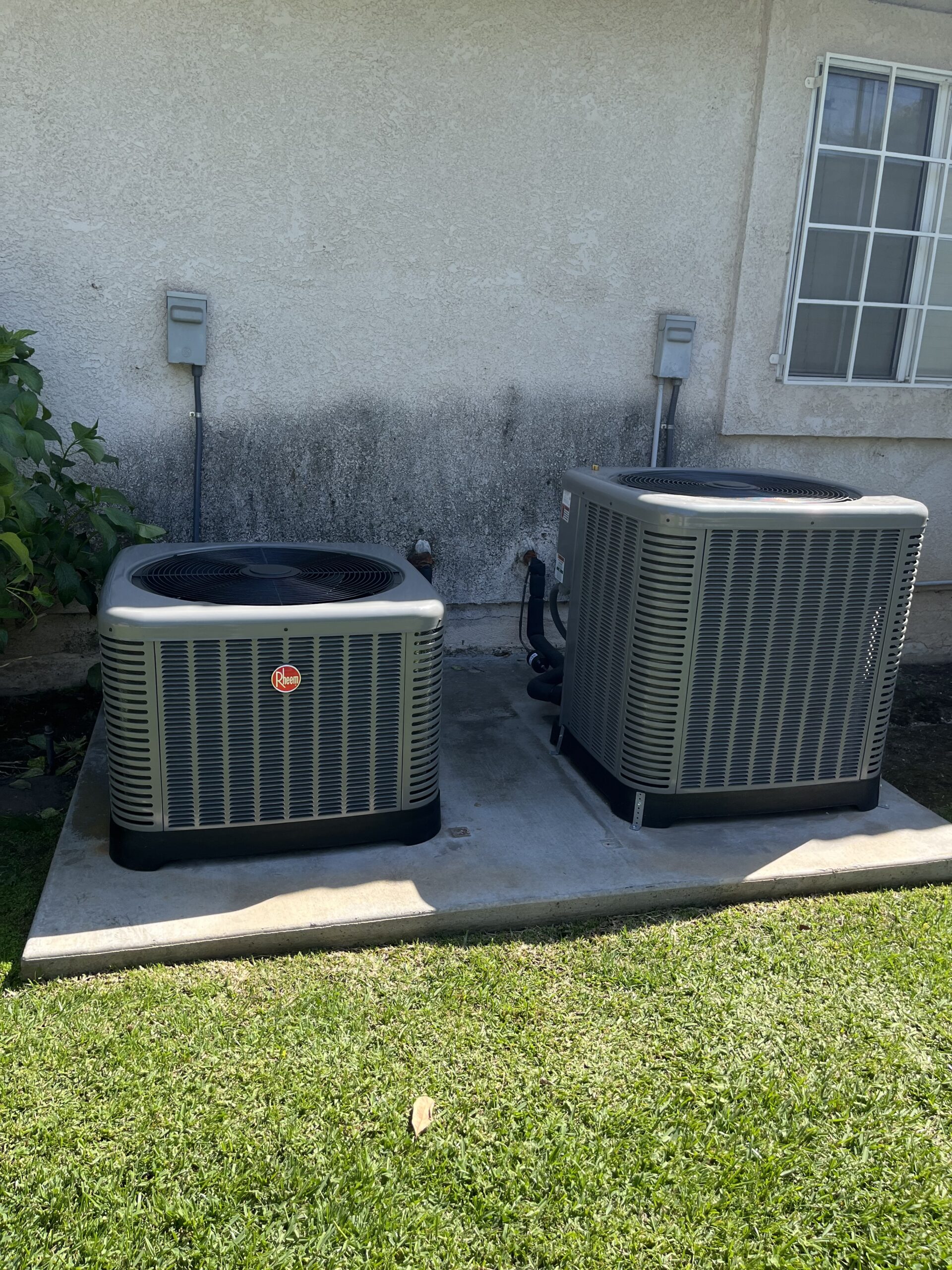
- Packaged units house all components in one cabinet, usually on a rooftop or slab. Common in older and some newer El Monte homes, they require easy service access to the single unit.
- Heat pump systems offer year-round cooling and heating using reversible refrigeration cycles. In El Monte’s mild climate, they are a practical solution for most homes.
Essential AC Maintenance for El Monte Conditions
Regular maintenance keeps cooling systems running efficiently and catches developing problems before they cause breakdowns during heat waves.
Homeowner Maintenance Tasks
Several maintenance tasks require no technical training and significantly impact system performance.
If you own a home, changing your air filter is the single most important thing you can do to keep your AC happy. When the filter gets clogged, your system has to fight for air, which means it works harder but cools less. And let’s be real, with all the dust and those Santa Ana winds in El Monte, you might need to swap out that filter every month during the hottest part of summer. Don’t slack on this one!
Standard 1-inch filters typically need to be replaced every 30-60 days during heavy use. Higher-efficiency 4-inch media filters last 3-6 months. Check filters monthly regardless of expected lifespan; actual replacement timing depends on local conditions.
Outdoor unit maintenance keeps condensers operating efficiently:
- Clear debris, leaves, and vegetation within two feet of units.
- Gently rinse condenser coils with a garden hose (not a pressure washer) monthly during the cooling season.
- Straighten bent fins using a fin comb from hardware stores.
- Verify units sit level on pads—settling causes operational problems.
- Check that nothing blocks airflow around the unit perimeter.
Condensate drain maintenance prevents water damage and mold growth. AC systems remove significant moisture from indoor air gallons daily during humid periods. This water drains through condensate lines that can clog with algae and debris.
Pour one cup of diluted white vinegar through the drain access points quarterly. Verify that drains flow freely to designated drainage areas.
Thermostat optimization improves comfort while reducing energy consumption:
- Program schedules match actual occupancy patterns.
- Avoid dramatic temperature swings that stress equipment.
- Use the “auto” fan setting rather than “on” for better humidity control.
- Consider smart thermostat upgrades for adaptive scheduling.
Professional AC Service Requirements
Some maintenance tasks require trained technicians with proper tools and EPA certifications.
Annual professional service should include:
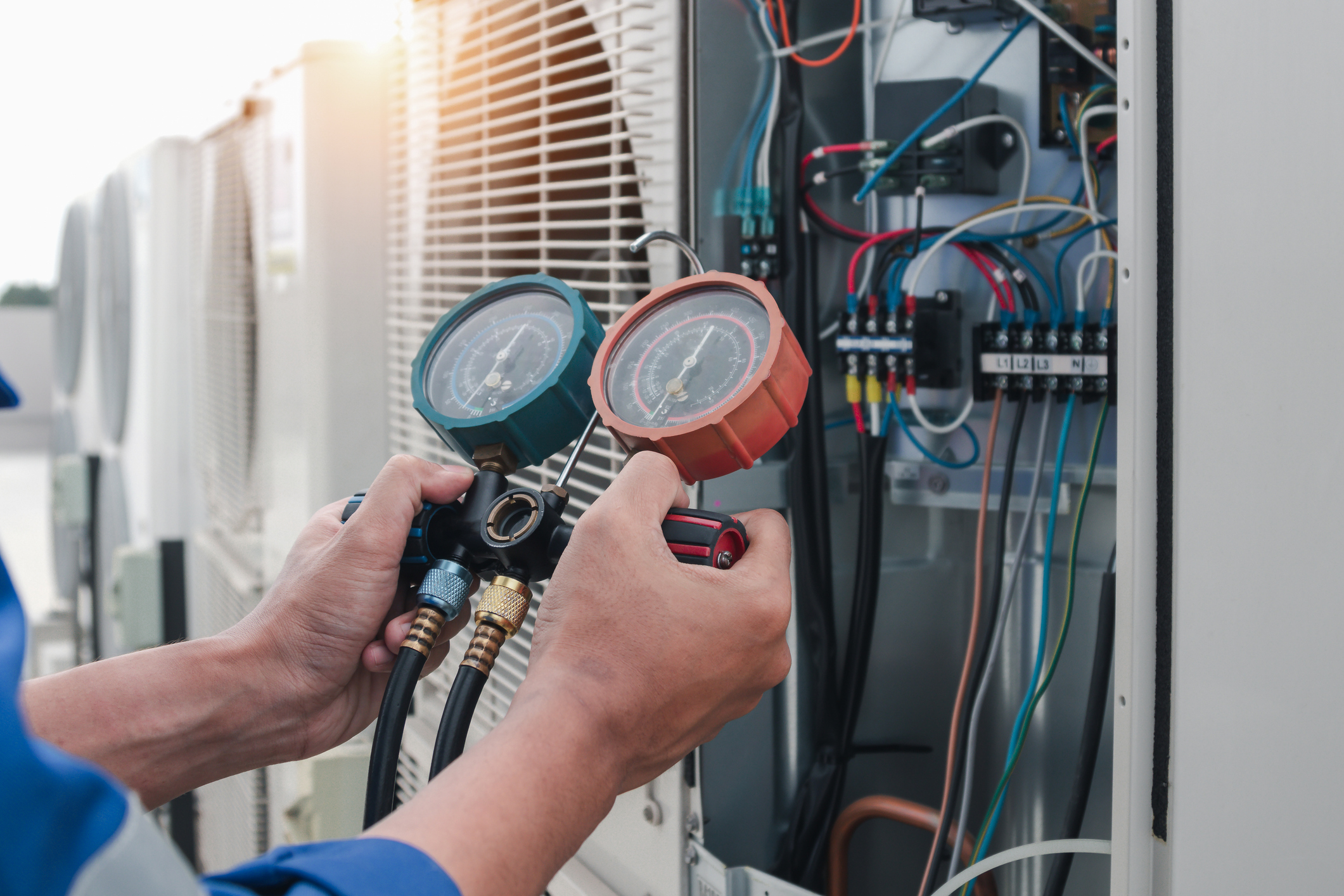
- Refrigerant level verification and leak detection.
- Electrical connection inspection and tightening.
- Compressor amperage testing.
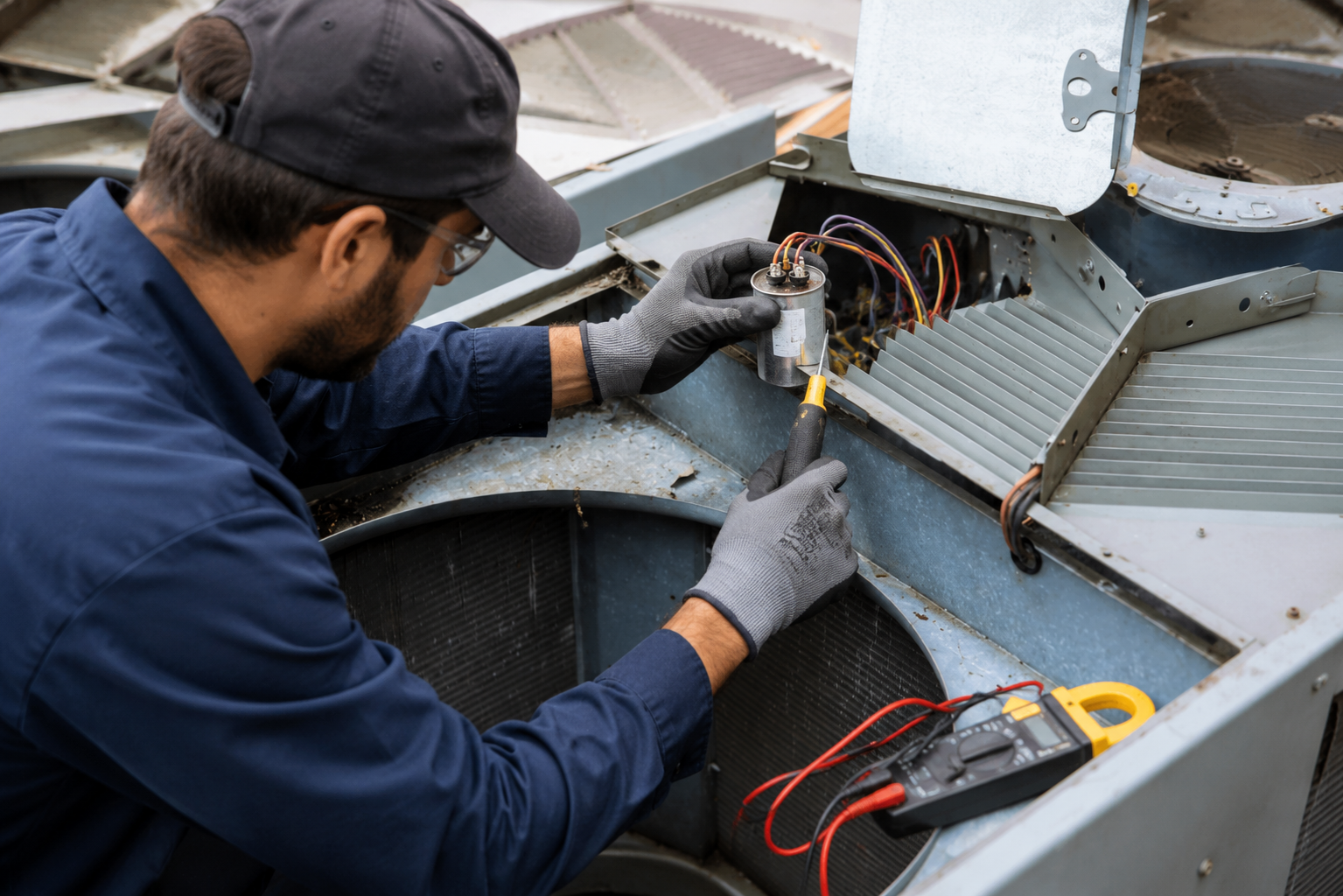
- Capacitor testing and replacement as needed.
- Thermostat calibration verification.
- Blower motor inspection and lubrication.
- Evaporator coil inspection.
- Condensate system verification.
- Complete system performance testing.
For home AC service in El Monte, CA, residents should schedule professional maintenance with us each spring before cooling season begins. Pre-season service identifies problems when technicians have availability—not during July heat waves when everyone needs emergency repairs.
Wukmir Heating and Air Conditioning has provided home AC service to El Monte, CA, homeowners who have relied on it since 1963. Our family-run operation started in a small garage and grew into a trusted community resource through consistent quality work and treating customers like family. Our technicians understand local conditions and common issues affecting El Monte cooling systems.
Maintenance Frequency by Component
| Component | Homeowner Task | Frequency | Professional Service | Frequency |
| Air Filter | Replace | Monthly (heavy use) | Inspect | Annual |
| Condenser Coils | Rinse | Monthly (cooling season) | Deep clean | Annual |
| Condensate Drain | Vinegar flush | Quarterly | Inspect/clear | Annual |
| Refrigerant | None | N/A | Check levels | Annual |
| Electrical | None | N/A | Test connections | Annual |
| Blower Motor | None | N/A | Inspect/lubricate | Annual |
Common AC Repairs and Warning Signs
Recognizing early warning signs prevents minor issues from becoming major failures.
Refrigerant Problems
Low refrigerant indicates a leak somewhere in the sealed system. Air conditioners do not consume refrigerant—it circulates continuously in closed loops. Low levels mean refrigerant escapes through damaged components.
Warning signs include:
- Reduced cooling capacity despite normal operation.
- Ice formation on refrigerant lines or evaporator coils.
- Longer run times without reaching the set temperature.
- Hissing sounds near indoor or outdoor units.
Refrigerant handling requires EPA certification. Only licensed technicians can legally diagnose and repair refrigerant system issues. Repairs involve locating leaks, repairing damaged components, and recharging systems to manufacturer specifications.
Electrical Component Failures
AC systems contain numerous electrical components that fail over time.
Capacitors store electrical energy and help motors start and run. Failed capacitors cause:
- Hard starting (system struggles to turn on).
- Humming sounds without fan or compressor operation.
- Intermittent operation.
- Complete failure to start.
Contactors act as switches controlling compressor and fan motor operation. Worn contactors cause:
- Chattering or buzzing sounds.
- Inconsistent operation.
- Failure to respond to thermostat commands.
Fan motors circulate air across coils. Failed motors cause:
- No airflow from vents (indoor motor).
- Overheating and shutdown (outdoor motor).
- Grinding or squealing sounds before failure.
Compressor Issues
Compressors represent the most expensive AC components. Problems include:
- Hard starting: Compressor struggles to begin operation, often clicking repeatedly before starting or tripping breakers. Hard start kits can extend compressor life but indicate developing problems.
- Overheating: Compressors shut down when internal temperatures exceed safe limits. Causes include dirty condenser coils, low refrigerant, restricted airflow, or internal wear.
- Complete failure: Compressors may fail due to age, electrical problems, refrigerant issues, or contamination. Replacement costs often approach new system prices, making replacement decisions necessary.
Airflow Problems
Reduced airflow affects comfort and system efficiency.
Ductwork issues common in El Monte homes include:
- Disconnected sections in attics or crawlspaces.
- Crushed flexible ducts.
- Leaks at connections are losing conditioned air.
- Inadequate insulation is causing condensation.
Blower problems affect air distribution:
- Dirty blower wheels reduce airflow.
- Belt slippage (on belt-driven models) causes squealing and reduced airflow.
- Motor failures stop air circulation entirely.
When to Repair vs. Replace
Equipment age, repair costs, and efficiency ratings factor into repair-or-replace decisions.
Consider repair when:
- The equipment is less than 10 years old.
- Repair costs stay below 50% of replacement cost.
- Problems involve single components rather than multiple failures.
- System still meets comfort needs when functioning.
Consider replacement when:
- Equipment exceeds 15 years old.
- Major components (compressor, coils) fail.
- Refrigerant type phases out (R-22 systems).
- Multiple repairs needed within short timeframes.
- Energy costs significantly exceed those of comparable homes.
- System cannot maintain comfort during extreme conditions.
Seasonal Service Timing
El Monte’s climate creates distinct service patterns.
- Spring (March-April): Ideal time for annual maintenance before cooling season. Technicians have availability, and problems get addressed before heat arrives.
- Summer (May-September): Peak demand period. Emergency repairs may involve wait times during heat waves. Preventive maintenance during this period is difficult to schedule.
- Fall (October-November): Good time for deferred maintenance or system upgrades. Moderate temperatures allow work without comfort interruption.
- Winter (December-February): Slower period for AC service. Good time for system replacements or major repairs with extended completion windows.
Conclusion
Air conditioning systems keep El Monte homes comfortable through long, hot summers. Regular maintenance prevents most problems, while early attention to warning signs avoids emergency failures during extreme heat.
Homeowner tasks filter changes, outdoor unit cleaning, and drain maintenance—take minimal time but significantly impact performance. Our professional service addresses technical components requiring specialized tools and training.
For homes with aging equipment or persistent problems, system evaluation helps determine cost-effective paths forward. Modern high-efficiency equipment delivers better comfort with lower operating costs, often making replacement economically sensible even when repairs remain possible.
Need AC service in El Monte? Contact Wukmir Heating and Air Conditioning for maintenance, repairs, or system evaluation.
FAQs
How Often Should You Be Servicing Your AC in El Monte?
Get your AC professionally serviced before summer to ensure smooth, efficient running. But that’s not all! Check the filter monthly, replacing it when clogged, and inspect the outdoor unit. Older or heavily used ACs might even need bi-annual service.
What’s the Real Cost of AC Maintenance in El Monte?
A basic AC tune-up costs $75 to $150. However, an annual maintenance agreement, typically $150 to $300, is a smart way to extend your AC’s lifespan and drastically reduce the cost of emergency repairs.
How Long Should You Expect Your AC to Last in Southern California?
In El Monte, you can usually expect a well-maintained central AC to last for about 15 to 20 years. But if you’re putting it through the wringer day after day during the long, hot summers, you may be looking at a shorter lifespan than someone living in a milder place. Ductless mini-splits typically last about a decade and a bit. And believe us, regular maintenance makes a huge difference.
What SEER Rating Do You Need for El Monte?
Aim for a SEER rating of 18 or above to save cash. But efficiency isn’t everything. Proper installation and sizing of the unit are actually far more important. A correctly installed 16 SEER system will outperform a 20 SEER unit that was installed poorly.
Why Does Your AC Run 24/7 But Still Not Cool You Down Properly?
Several factors could be to blame: low refrigerant, clogged indoor or outdoor coils, a blocked air filter, faulty ductwork, or an undersized system for the space. Extreme heat, exceeding the AC’s design capacity, can also cause it to run constantly. The best way to diagnose the real issue is to consult us.