


It’s one of those small, maddening moments of summer: the AC is clearly on, you can hear it grinding away somewhere, and yet you’re still sitting there warm. That’s usually the moment a lot of people go looking for AC repair in El Monte, CA, standing right under a vent, holding a hand up to air that just won’t turn cold. And it’s a fair frustration to have. But here’s what’s worth knowing before you panic about a big bill. An air conditioner that runs without cooling almost always has a plain, findable reason behind it. It’s not haunted, and it’s not always pricey to put right. Sometimes the fix is something you can sort out yourself in about ten minutes, and other times it’s a job for a tech with the proper tools. Either way, you can usually narrow it down a long way before anyone even shows up. So here’s what tends to go wrong, in plain terms, and what each one really takes to fix.
1. Start With the Simple Stuff
Before your mind leaps straight to a scary repair, slow down for a second and check the easy things, because they cause this far more often than anyone gives them credit for. Start at the thermostat. Is it set to cool? Is it set a few degrees below the room temperature? Is it stuck running some old schedule a family member set up and nobody remembers anymore? A dead thermostat battery, all on its own, is behind a surprising number of these calls, and it’s a one-dollar fix. While you’re up, take a quick lap around the house and look for vents that got nudged shut or quietly hidden behind a couch. A few closed registers can quietly throw the whole house off balance, and the best part is that checking every bit of this costs you nothing but a couple of spare minutes.
2. When Airflow Is the Real Problem
If the simple stuff all checks out, then look at airflow next, because it’s the number one real cause, and it isn’t even a close race. Most people who end up typing air conditioner not cooling properly repair solutions into their phone are really just dealing with a filthy air filter and don’t know it. A clogged filter strangles the whole system. The unit works itself hard, but hardly any cool air ever makes it into the rooms where you’re actually sitting. Swapping that filter out takes about five minutes and a few dollars, and through the hot months, it should happen every month or two without fail. And if the filter is already clean and nothing gets better, then the indoor coil itself might be packed solid with dust, which is the point where a pro really needs to step in and handle it.
3. The Refrigerant Question
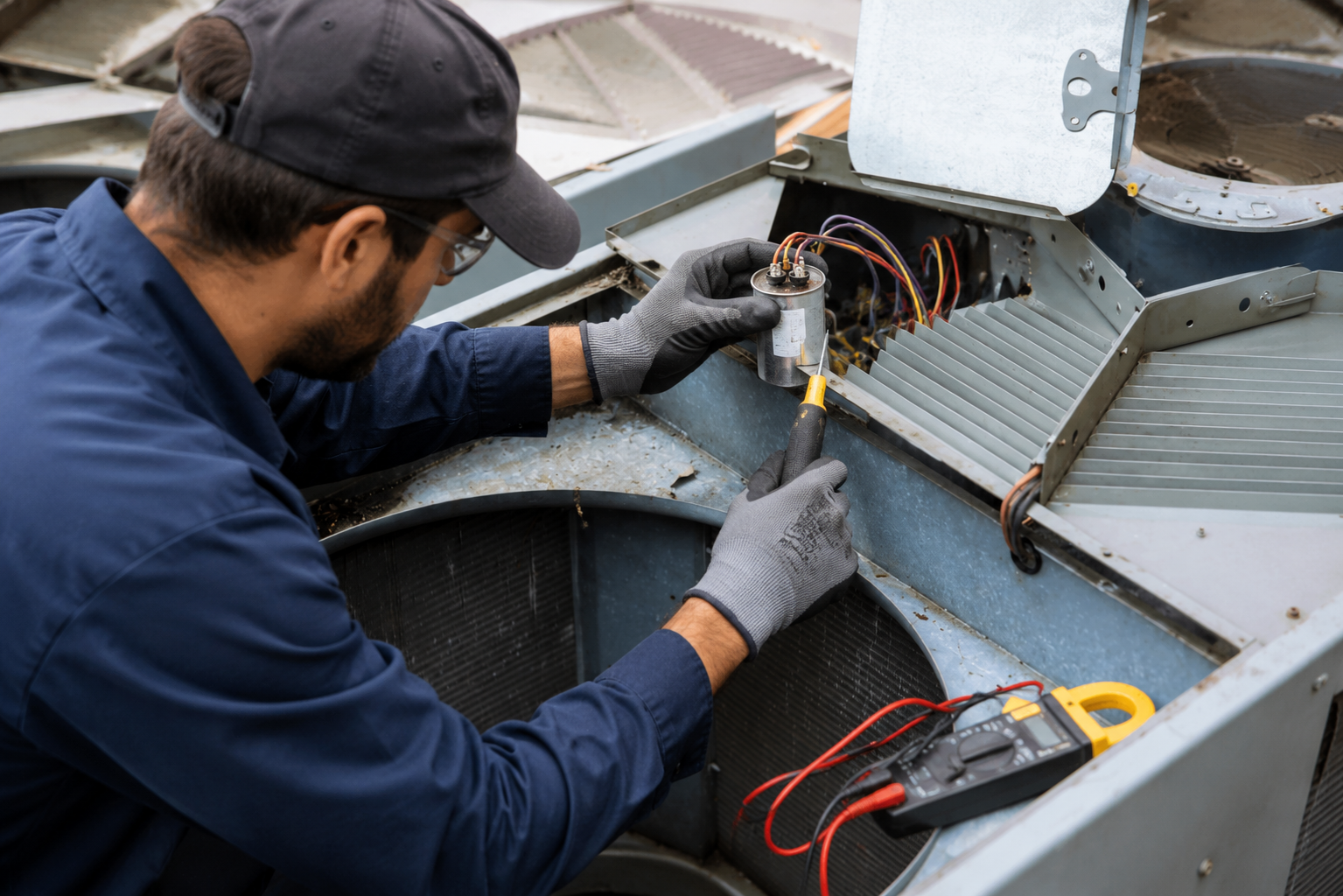
When the air from the vents keeps moving along fine but never actually turns cold, refrigerant is usually the thing to suspect. Refrigerant is what does the real cooling, pulling the heat straight back out of your home, and the system that holds it is sealed shut. That detail matters because a properly sealed system should never lose any on its own. So if the level has gone low, something is leaking somewhere along those lines. Look for a layer of frost building up on the copper lines, or listen closely for a faint hissing sound near the unit. This one is firmly off-limits for DIY; refrigerant is a regulated substance, and a tech has to track down the leak, seal it, and top the system back up to exactly the right level.
4. Don’t Forget the Unit Outside
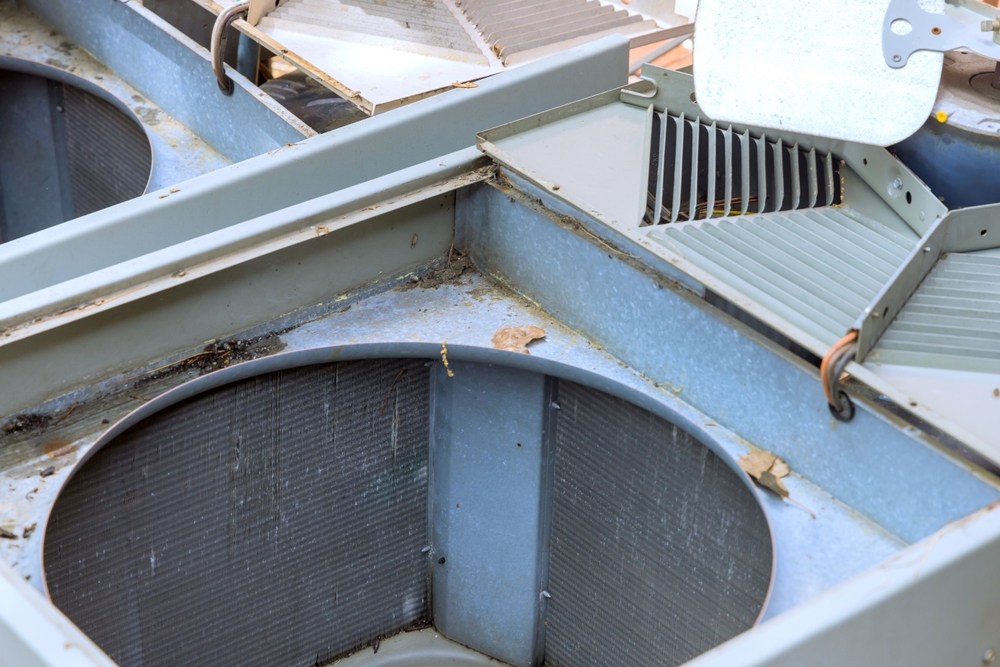
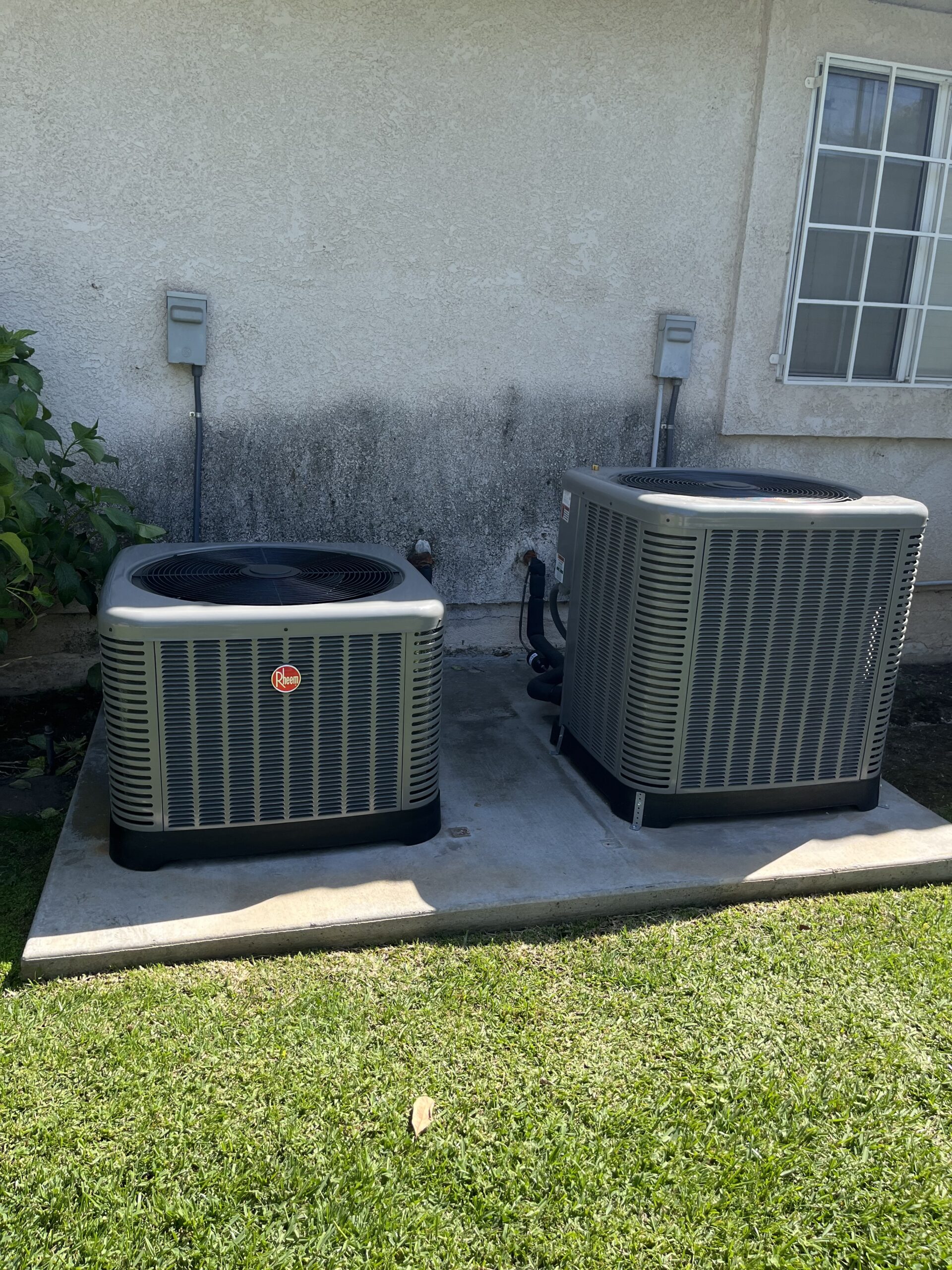
People stand there glaring at the indoor vents and forget there’s a whole other half of the system sitting out in the yard. That outdoor unit, the condenser, is the part that throws off all the heat your AC pulls out of the house. It can only do that job when air moves through it freely. Pile leaves, grass clippings, or a winter’s worth of dust up against it, and the heat gets trapped with nowhere to go, so your house stays warm no matter what the thermostat says. Give it a couple of clear feet of space on every side, and hose the fins down gently if they look caked with grime. But if that outdoor fan isn’t spinning at all, stop right there, because that’s an electrical or motor problem, and that one belongs with a professional.
5. When Repair Turns Into Replace
Every once in a while, the truthful answer just isn’t a repair at all. If the unit is already past ten or twelve years old, if it wheezes its way through every summer, or if you’ve been paying for one fix after another, then a brand-new one might genuinely be the smarter spend. Newer systems cool the house better and cost noticeably less to run, and eventually those monthly savings beat sinking more money into the tired old unit. That’s the point where air conditioning installation in El Monte, CA, becomes the conversation that’s actually worth having instead. A straight-talking tech will lay both options out on the table for you, with honest numbers attached, so you can choose for yourself and not because somebody pushed you into it.
Conclusion
An AC that runs but won’t cool is a miserable thing to deal with, but it’s almost never the full-blown disaster it feels like while you’re stuck in a hot, sticky room. Start with the easy wins, the thermostat, the filter, the vents, because they cost nothing to check, and they turn out to be the answer more often than most people expect. When the trouble clearly goes deeper than that, like low refrigerant or a smothered outdoor unit, that’s the moment to call a tech in rather than keep guessing. And when the system is simply old and worn out, take an honest look at fixing it versus replacing it altogether. Catch the problem early, whichever way it ends up landing, and you’ll be back in a cool, comfortable house a whole lot sooner than you’d ever expect.
“Warm air from a working AC? Something’s off. Call Wukmir Heating and Air Conditioning at 626-442-2148, and we’ll find it and cool you down fast.”
FAQs
Q1: Why is my AC running but not cooling my El Monte, CA, home?
For most El Monte homes, the usual suspects are a clogged filter, a thermostat set wrong, or a dirty outdoor unit. If the air is moving but never feels cold, low refrigerant from a leak is often the reason, and that one needs a technician.
Q2: Can a dirty air filter really stop my AC from cooling?
Yes, more often than people think. A clogged filter chokes airflow, so the system works hard but barely moves cool air, and swapping it is one of the cheapest, fastest fixes there is.
Q3: How often should I have my air conditioner serviced?
Once a year is the general rule, ideally in spring before the heat arrives. A yearly tune-up catches small problems early, keeps the system efficient, and helps avoid a breakdown in the middle of summer.